Eight stalls. Eight sets of receipts. Eight end-of-day reconciliations. Your tenants are running their own systems and you have no visibility into any of them. Disputes about revenue sharing start because the numbers never agree.
OrderZ gives food court operators in Singapore one connected platform for multi-stall ordering, centralised billing, tenant revenue tracking, and consolidated reporting — so you know exactly what every stall made, every day.
Each stall runs its own billing. At the end of the day, you collect individual reports — or chase tenants who have not sent them. Building a complete picture of the food court's total revenue takes hours.
Revenue sharing, commission deductions, and GST calculations create friction when each party is working from a different set of numbers. A centralised system eliminates this entirely.
A customer wants rice from stall 3 and drinks from stall 7. Two separate queues. Two separate payments. In a food court where variety is the advantage, a fragmented payment experience is a reason to leave.
The popular stalls back up during lunch while other stalls sit empty. You have no way to see real-time queue depth across stalls, or to encourage customers to stalls with shorter waits.
Every time a tenant changes or a new stall opens, setting up billing, menu, and reporting from scratch takes longer than it should. Without a standardised system, each new tenant is a manual process.
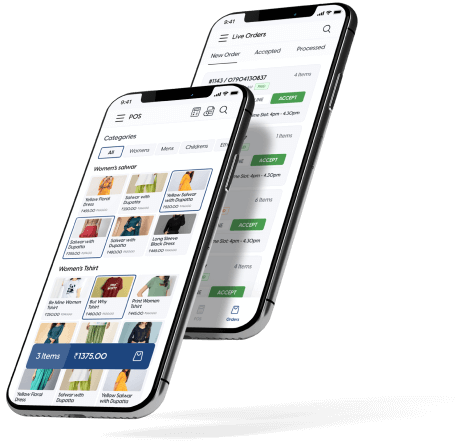
OrderZ supports both shared ordering points and individual stall QR codes. Customers order from one or multiple stalls in a single session. Orders route automatically to the correct stall display.
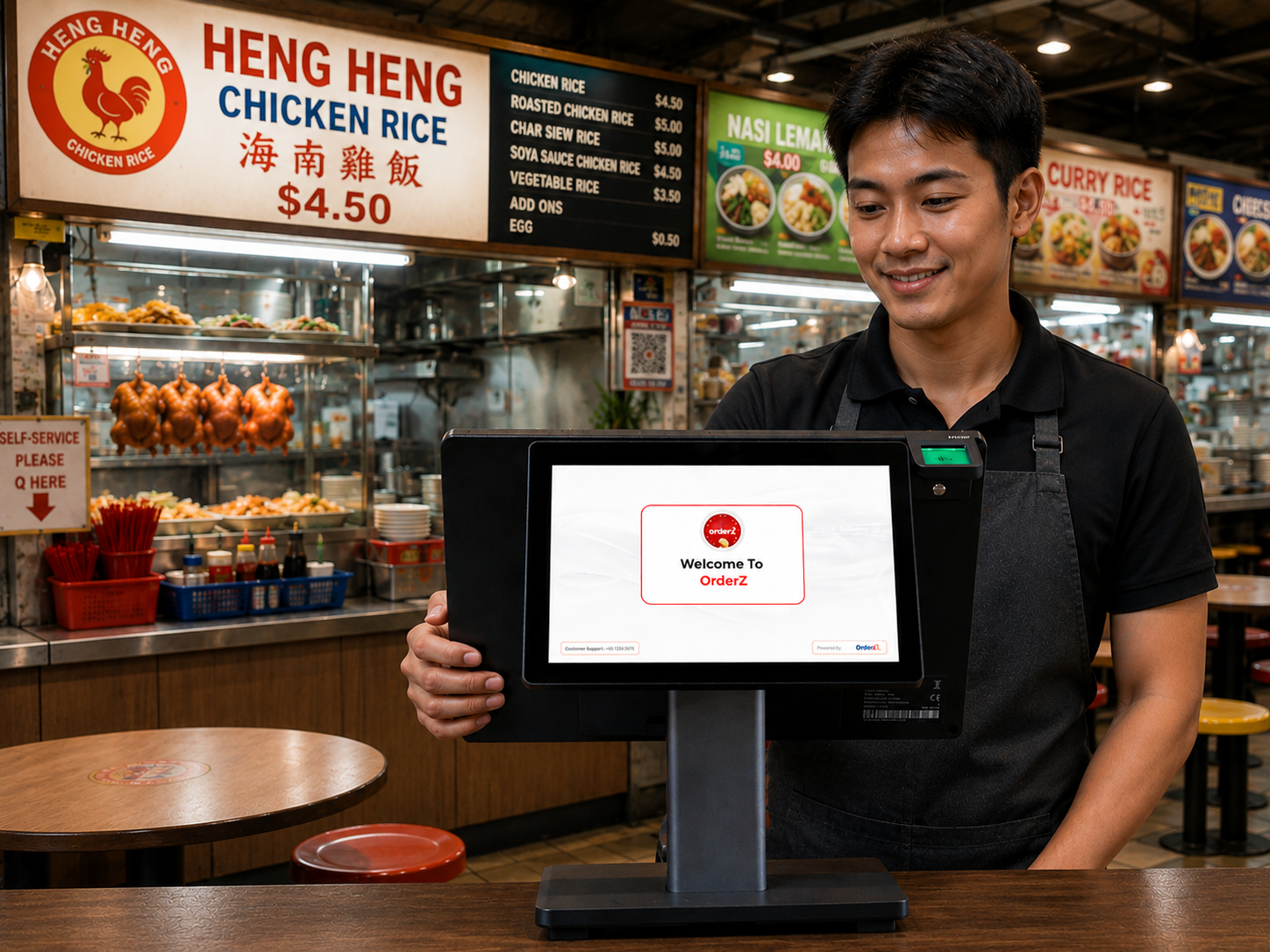
Stall operators see only their own orders. Each stall manages its own kitchen flow. The food court operator sees all stalls. No shared screens, no confusion between stalls.
OrderZ supports centralised payment (customer pays once for all stalls) or individual stall billing. Revenue is tracked and reported per stall automatically, with GST-ready invoicing built in.
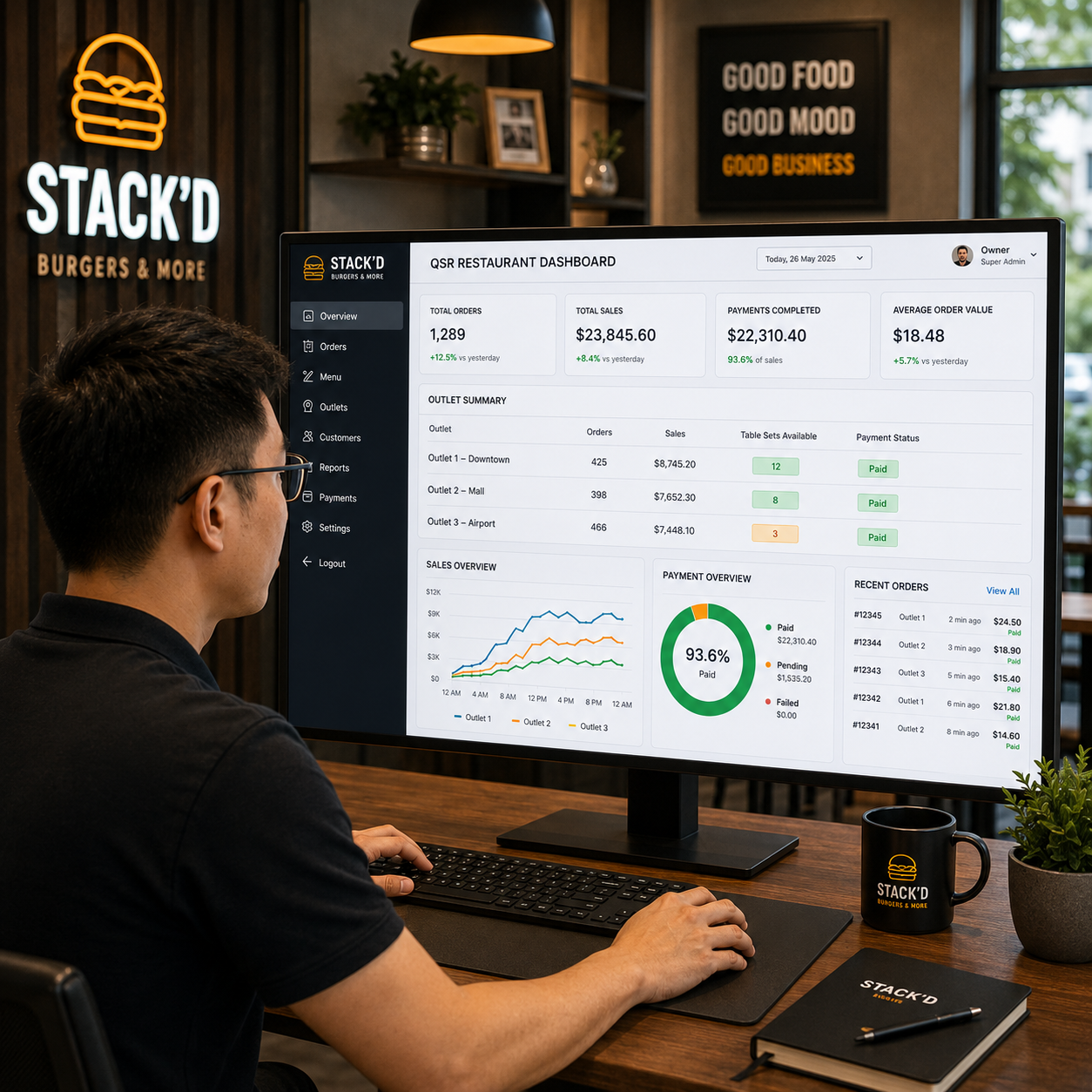
The operator has a separate dashboard showing all stalls, total revenue, individual stall performance, and day-on-day comparisons. Disputes about numbers become impossible.
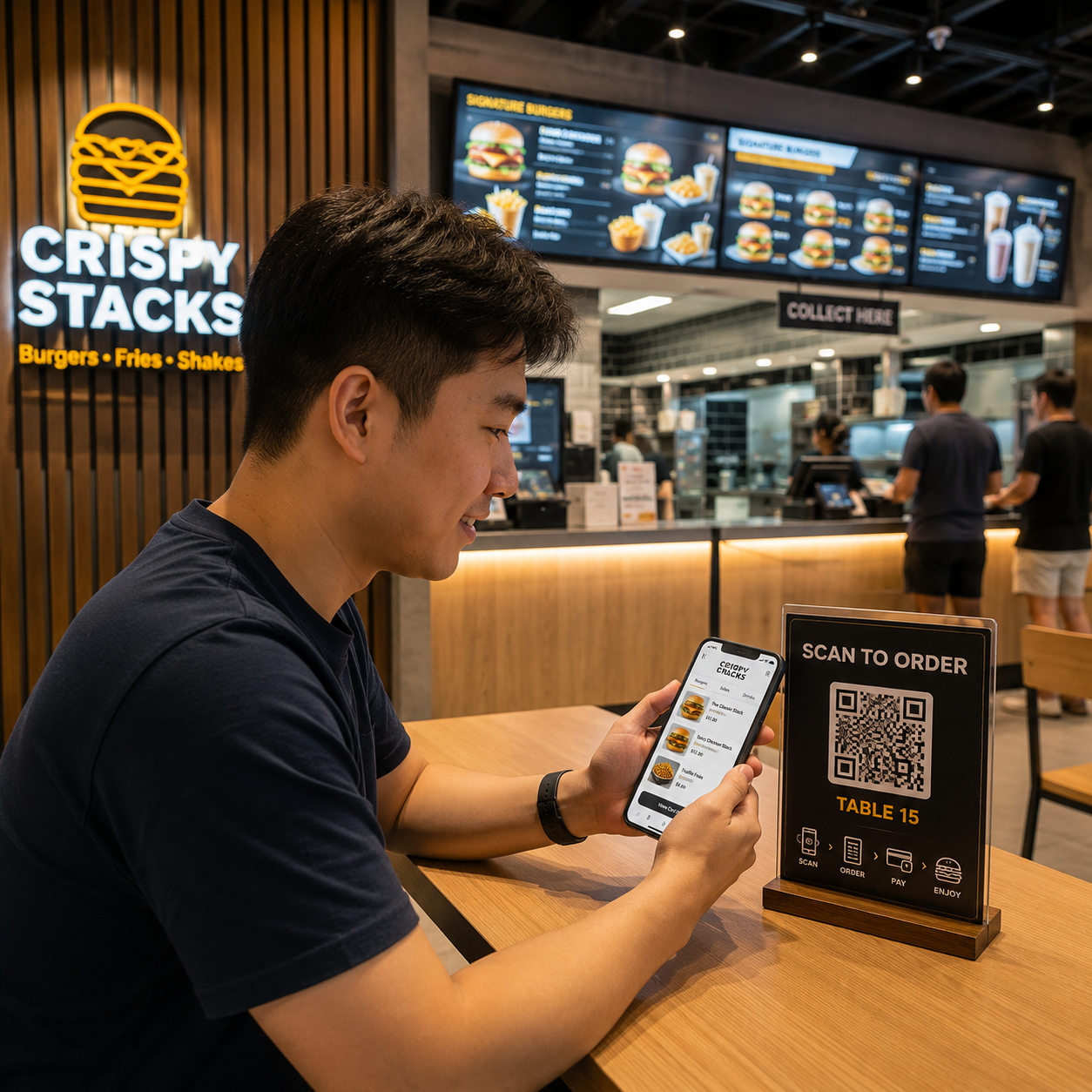
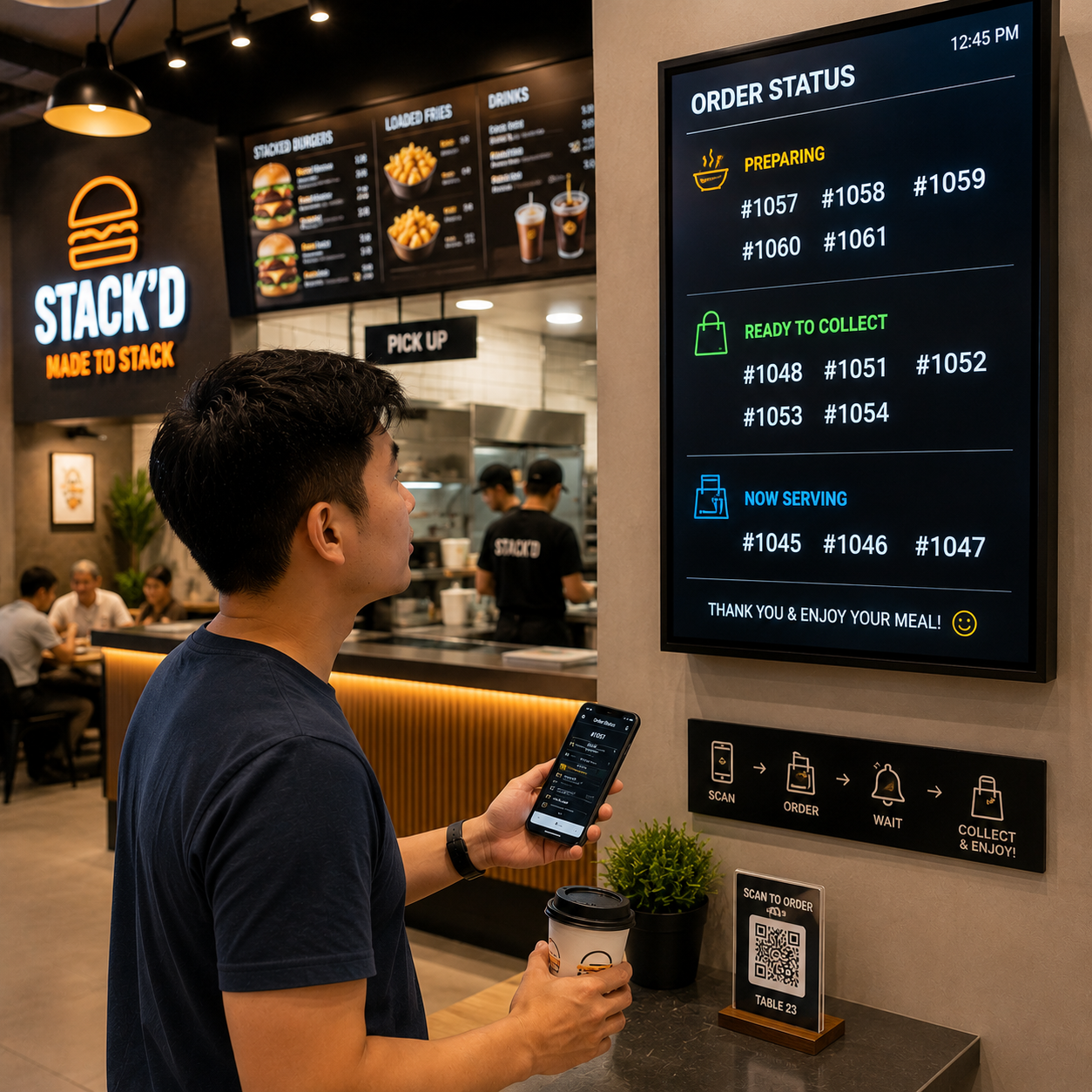
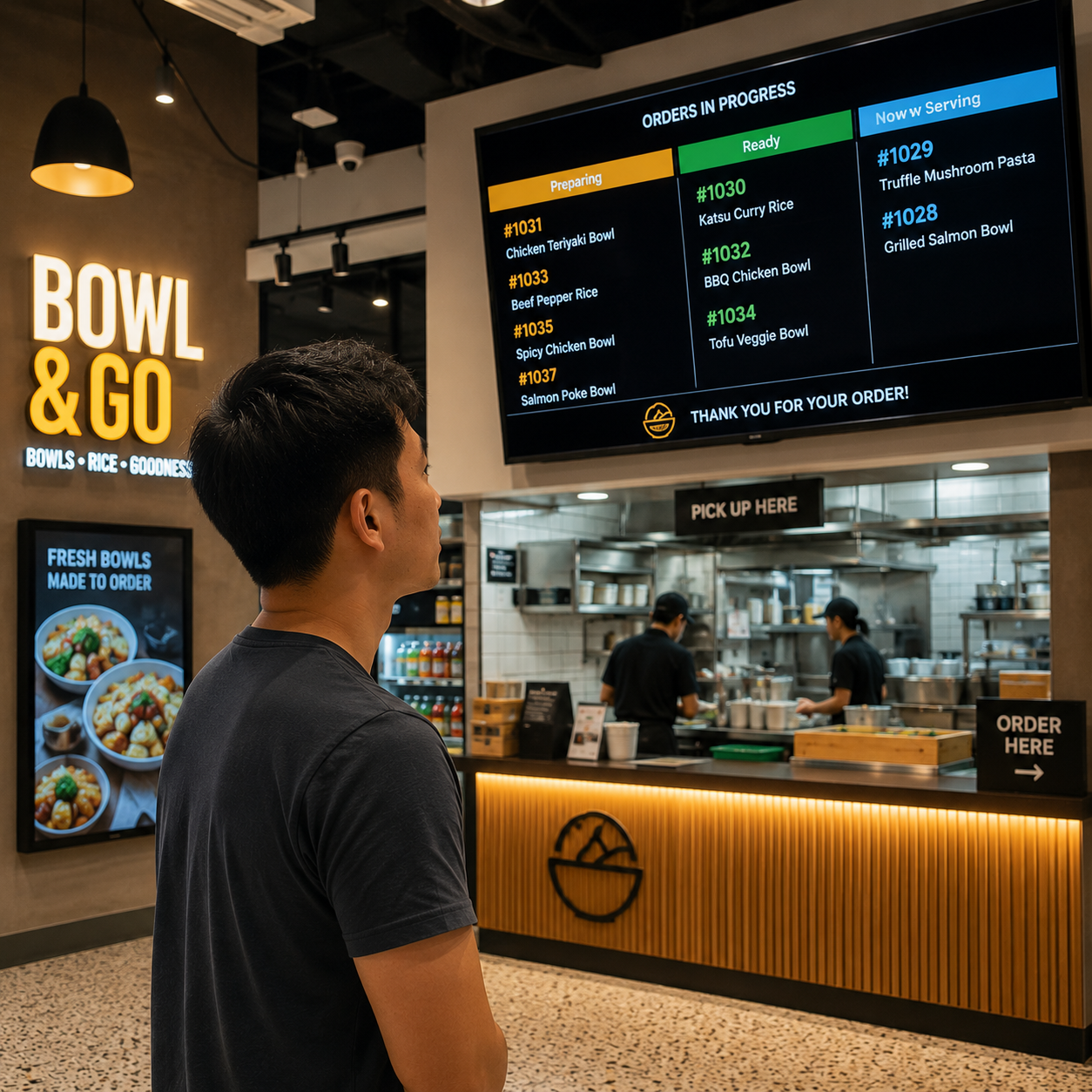
Shared or individual QR ordering across all stalls. Orders route to the correct stall automatically. Customers can order from multiple stalls in one session.
Every order prints two slips — one to the stall, one to the customer. Customers can sit or queue elsewhere — no need to hover at the counter.
See all stalls, total revenue, and individual stall performance from one screen. Real-time data. No chasing tenants for end-of-day numbers.
Automatic per-stall revenue reports generated daily. GST-ready. Exportable for accounting and tenant invoicing. No manual compilation.
Centralised payment for all stalls at one checkout point, or individual stall billing — configurable to your food court model and tenant agreements.
Onboard new stalls quickly with standardised setup. Each tenant has their own menu, display, and billing — all managed within the operator's platform.
See which stalls are busiest in real time. Identify bottlenecks and manage crowd flow during lunch and dinner peaks without walking the floor.
No waiting for individual stall reports. No chasing tenants by phone. The operator dashboard updates in real time as each stall processes orders.
When both the operator and the tenant are looking at the same system-generated numbers, disputes about revenue sharing have no ground to stand on.
With centralised ordering and billing, customers order from multiple stalls and pay in one transaction — a streamlined, modern experience.
Standardised setup across all stalls means a new tenant can be live with menu, billing, and display configured in a single session.
Real stories. Real results. Real businesses.
Testimonials are placeholders pending written client sign-off.
Yes. OrderZ is designed for food court operators managing multiple stalls. It supports multi-stall QR ordering, per-stall billing, centralised operator reporting, and tenant revenue tracking — all from one connected platform.
Yes. OrderZ supports a shared ordering model where customers browse a combined menu and order from multiple stalls in one session. Orders route automatically to each stall's display. Payment is collected once at checkout.
OrderZ generates per-stall revenue reports automatically at the end of each day. Reports are GST-ready and exportable for accounting and tenant invoicing — removing the need for manual compilation from individual stall records.
Yes. Each stall has its own display, menu, and billing managed independently. Stall operators see only their own orders and sales. The food court operator has a separate dashboard showing all stalls in real time.
Yes. OrderZ is configurable for centralised payment (customer pays once for all stalls) or individual stall billing. The billing model is set by the operator based on the food court layout and tenant agreements.
A new tenant can be onboarded in a single session. Menu, display, and billing are configured using the standardised setup process. There is no requirement for IT involvement or custom development.
Costs depend on the number of stalls, modules required, and billing model. OrderZ offers packages tailored to food court operators managing multiple tenants. Book a free demo for a recommendation.